Posts

Showing posts with the label Culture

書道: Japanese Calligraphy

Image
Hello everyone! Japanese calligraphy (書道、shodou) was one of the first cultural activities I did when I first started learning Japanese. What is 書道, and how does it play into Japanese culture? Japanese Calligraphy「書道」 Japanese calligraphy involves using a calligraphy brush (筆、fude) and black ink (墨、sumi), along with other materials, to artistically write different Japanese characters (Kanji). There are many different styles, and each person writes calligraphy a little differently - which led to the common phrase 書は人なり (Sho wa hito nari), or "calligraphy reveals personality". The History of Shodou 「書道の歴史」 Like with many things, kanji originally spread to Japan from China. Confucian texts near the end of the third century were the first to introduce kanji, and their usage gradually increased until around the seventh century. One of the first forms of calligraphy was "Zen calligraphy" (墨跡、bokuseki), practiced by early Buddhist priests. It was known for its a...

Christmas in Japan

Image
Merry late Christmas, everyone! I know it's almost a month late, but I did some research on what Christmas is like in Japan, and wanted to share some of the most interesting information I found. What's Christmas like in Japan, and what relevance does it have to Japanese culture? Christmas in Japan「日本のクリスマス」 Christmas Day Japan is mostly Shinto/Buddhist, so Christianity doesn't have much of an influence. This means that Christmas doesn't have much religious or cultural meaning. It's more of a consumerist holiday, similar to New Years in the U.S. (and unlike New Years in Japan). Many consumerist traditions were brought to Japan from U.S. and other foreign companies. Christmas Cakes 「クリスマスケーキ」 are extremely popular. They're generally sponge cakes decorated with strawberries and whipped cream. Tokyo Disneyland's "Christmas Fantasy" is very popular, especially for families with young children. The entire park is decorated themed to ...

Onigiri

Image
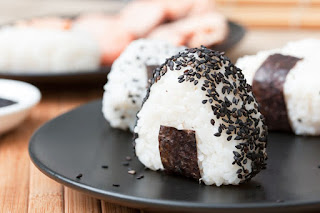
Recently, I participated in "Onigiri Action", a fundraiser sponsored by Table for Two that ended on Wednesday, November 20th. For every picture of Onigiri posted to their website or #onigiriaction on Instagram, Twitter, or Facebook, Table for Two donated 5 meals to children in need- and with almost 300,000 Onigiri photos from around the world, 8,000 warm meals are being provided to children for a year! Learn more at  https://onigiri-action.com/en/ . This made me wonder: What are Onigiri, and what makes them so important to Japanese culture? Here is some information I presented to my school's Japanese Culture Club for our Onigiri meeting and to prepare us for the lunchtime Onigiri Action event we put on. Onigiri「おにぎり」 What are Onigiri? Not 鬼義理 (oni-giri), demon obligation, Onigiri is the Japanese word for “rice ball”. They’re an easy to carry meal, having a rice + side dish (the filling), which gives you enough energy to finish the day. They’re made for ma...

日本旅行:7日・8日・9日

2019年7月5・6・7日 旅行の 7 日・8日・9日 こんにちは皆さん、 (Konnichiwa minasan,) Japanese elementary schools are a lot different than American elementary schools. I learned that firsthand today when I volunteered at 都南小学校 (Tonan Elementary School). First of all, not many American elementary schools would have three stories + roof access! We didn’t go on the roof (and I don’t think people are allowed up there often), but that that is an option. As we walked in, elementary school kids hung out of every window waving and yelling “hello” at us. I haven’t had much experience with elementary school besides being in one, but I think the atmosphere was a bit different here. The kids were very talkative and energetic, moreso than America, but also good at listening to direction- pushing tables to the side quickly so we could teach them “duck duck goose” and being fully in charge of serving each other lunch. They were learning about metamorphosis and had boxes of tens of silkworms. They really liked us holdin...

日本旅行:5日・6日

2019年7月 3 ・ 4 日 旅行の 5 日・ 6 日 こんにちは皆さん、 (Konnichiwa minasan,) These past two days, I’ve done a lot of shopping! First, we went to 秋葉原 (Akihabara), a very busy electric-and-geek culture shopping Mecca for anime-lovers and technology-fanatics alike. Wherever you are in Akihabara, you’re likely to be able to see some kind of anime girl staring down at you from a poster, sign, or shop window trying to get you to buy their products. I spent my 3 hours of free time shopping with a friend at various stores- looking for any merchandise of my favorite characters and shows or anything else that might be nice to have. Some of these stores include Mandarake (a secondhand-yet-high-quality merchandise shop), amiami (a big anime/manga merchandise shop within Radio Kaikan, a huge 10 floor mall) and Gachapon Kaikan (a shop dedicated to capsule-toy vending machines). I found a couple things I liked but ended up getting less than I expected. I also got to try some made-on-the-spot Takoyaki, which ...

日本旅行:3日・4日

1 日 7 月2019年・2日7月2019年 旅行の 3 日・ 4 日 こんにちは皆さん、 (Konnichiwa minasan,) It’s been a bit busy going to new places every day! I’ve been busy from when I wake up to around 9-10PM going places, speaking Japanese with friends, or just working on homework together. One of the assignments is actually to keep a diary in Japanese, so I’ll end up having a log of my travels in both Japanese and English! Because I was very tired last night, I am going to record my travels for yesterday and today in one post. Yesterday, it truly hit me that I was in Japan. Walking to 参宮橋駅 (Sangubashi-eki), I looked around and really felt like I was in Japan. This feeling intensified more as we waited on the platform for our train to arrive and started our way towards Shibuya. I never thought walking through a train station could be so exciting, but it almost felt like I was in an underground city. Once we resurfaced, a canopy of tropical-looking trees and suspended roads sheltered us from the non-existent s...

Tests in Japan

 久しぶりですね!Long time no see, everyone! May and early June can be a hard time for a lot of US secondary school students. With AP Testing, finals, and standardized testing, it can feel like we test a lot! Japan also has a very heavy emphasis on testing- one that overshadows the United States. What are the important tests in Japan, and how do they compare to the United States? Tests in Japan「日本の試験」 Japan has the same regular finals and unit tests as the United States has. However, Japanese entrance exams are some of the most important tests in a student's life- even more than the SAT or ACT, or almost any other US Test. Going into junior high school, high school, and university may involve taking entrance exams which rank a student's proficiency and decides their academic (and, as a result, their lifelong) future. Junior High and High School Examinations Junior high and high school entrance exams are not mandatory like university entrance exams. It's always an option ...

令和

令和「れいわ」(Reiwa) Reiwa is the name of the new era (元号「げんごう」gengou) in Japan.  They normally come from different Chinese classical literature, because the era system was first used in China! Reiwa comes from the oldest collection of Japanese poetry, "Manyoshu". This new name will go in effect starting May 1st, which is when Crown Prince Naruhito will become the new emperor. What does Reiwa mean? Reiwa has two kanji: 令 and 和. 令 generally means "order" or "celebration", and 和 means "peace". Because of this, some people are puzzled over what Reiwa is supposed to mean. Some thought it meant "give in to order", but the lesser-used meaning of 令 ("good" or "beautiful") is the true sense- making the era mean "beautiful harmony". The current period, 平成, simply means "achieving peace". This new period is a very significant event for Japan. A new emperor, new era- it's like a fresh slate. If you...